
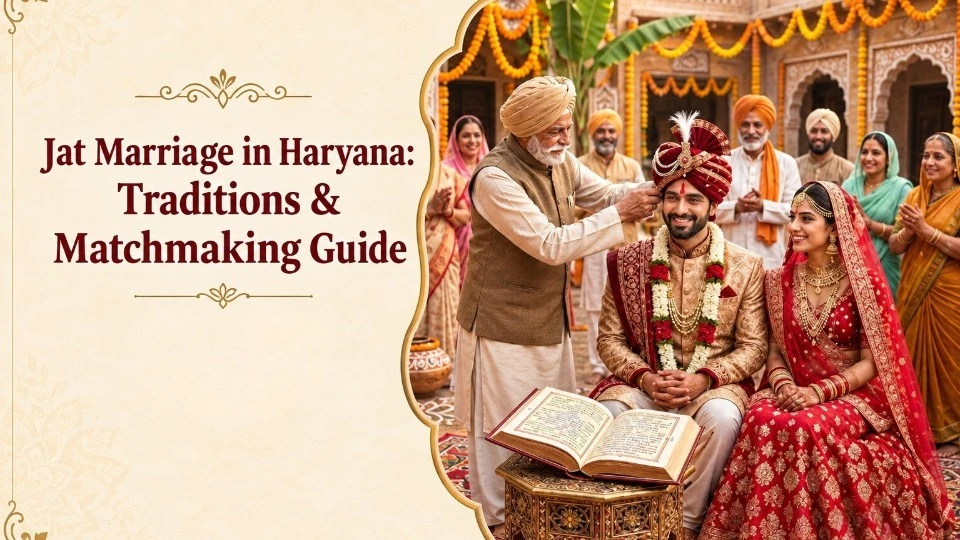
For the Jat community in Haryana, marriage has never been a purely personal decision – it’s a family and community milestone, shaped by generations of tradition around land, lineage, and family standing. Understanding these traditions matters, whether you’re searching for a partner yourself or helping a son or daughter navigate the process.
This guide walks through what makes Jat marriage in Haryana distinct, the values families typically prioritize, and how a matchmaking approach built around this specific community can make the search easier – and more respectful of tradition – than a general platform ever could.
Understanding Jat Marriage Traditions
Jat marriages in Haryana carry customs that go beyond the wedding ceremony itself. One of the most important is the emphasis on gotra – the clan or lineage a family belongs to. Traditionally, families look for matches outside their own gotra, and often outside their own village as well, as a matter of established custom rather than personal preference.
This isn’t a detail a generic matrimonial filter is built to handle well. Getting it right requires an advisor who understands gotra structures and village relationships in depth – which is exactly why community-specific matchmaking tends to serve Jat families better than an open, general-purpose platform.
Beyond gotra, ceremonies typically follow familiar North Indian wedding customs – roka, sagai, haldi, and phera rounds – often with regional Haryanvi touches in music, food, and the involvement of extended family throughout each stage.
Family & Community Values That Matter
A few values consistently shape what Jat families in Haryana look for in a match:
- Family standing and background – including land, agricultural ties, and the family’s reputation within the community
- Joint family involvement – many Jat households maintain close, multi-generational family structures where elders play an active role in major life decisions
- Work ethic and grounded values – a strong emphasis on hard work, discipline, and humility, often traced back to the community’s agrarian roots
- Physical health and vitality – Haryana’s strong sporting culture (wrestling and athletics in particular) means fitness and health are often genuinely valued, not just as a checkbox
- Respect for elders and tradition – decisions are rarely made by the couple alone; parents and extended family are typically part of the conversation from the start
These aren’t just cultural footnotes – they’re often the real basis for whether a match feels right to a family, even after two individuals seem personally compatible.
Honoring Tradition While Adapting to Modern Life
Jat families today are navigating real change alongside tradition. Education and career opportunities have expanded significantly, more women are pursuing higher education and independent careers, and many families – supported by broader awareness campaigns across Haryana – now prioritize simple, dowry-free marriages over elaborate, expense-driven ones.
None of this means tradition is being set aside. It means families are increasingly looking for matches where both people share the community’s core values while also being aligned on modern realities – dual careers, life outside the village, or settling in a different city or even abroad.
What to Look for in a Match
For most Jat families in Haryana, a strong match usually comes down to a combination of:
- Compatible gotra and village background, respecting traditional customs
- Similar family values around joint family life and elder involvement
- Aligned expectations on education, career, and lifestyle
- A shared sense of grounded, values-first living – even if one or both families have moved to a city
- Geographic fit – whether that means staying within Haryana, or being open to nearby regions like Punjab, western UP, or Rajasthan where similar values are common
How Specialized Matchmaking Helps
This is where a general matrimonial site tends to fall short: it can filter by caste or community as a checkbox, but it can’t understand gotra nuance, verify village background, or gauge how a family actually wants to be involved in the process. A matchmaker who specializes in the Jat community brings that context in from the very first conversation – screening for gotra and village compatibility before an introduction is even made, and understanding how much family involvement a household expects at each stage.
That’s the difference between being handed a list of profiles and being introduced to someone who’s already been considered against the traditions that matter to your family.
Ready to Find a Match That Respects Your Traditions?
If you’re looking for a partner within the Jat community – whether based in Haryana or beyond – schedule a consultation with a Vats advisor. We’ll take the time to understand your family’s background, gotra considerations, and what you’re looking for, so every introduction respects the traditions that matter to you.