Author name: admin

jat-marriage-in-haryana-traditions-and-matchmaking-guide
Blog

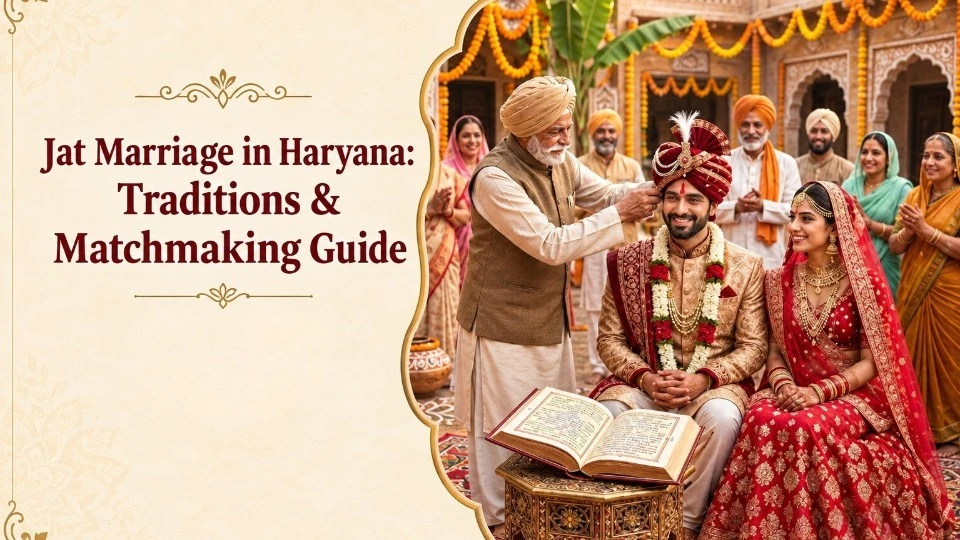
Jat Marriage in Haryana: Traditions & Matchmaking Guide

For the Jat community in Haryana, marriage has never been a purely personal decision – it’s a family and community milestone, shaped by generations of tradition around land, lineage, and family standing. Understanding these traditions matters, whether you’re searching for a partner yourself or helping a son or daughter navigate the process. This guide walks through what makes Jat marriage in Haryana distinct, the values families typically prioritize, and how a matchmaking approach built around this specific community can make the search easier – and more respectful of tradition – than a general platform ever could. Understanding Jat Marriage Traditions Jat marriages in Haryana carry customs that go beyond the wedding ceremony itself. One of the most important is the emphasis on gotra – the clan or lineage a family belongs to. Traditionally, families look for matches outside their own gotra, and often outside their own village as well, as a matter of established custom rather than personal preference. This isn’t a detail a generic matrimonial filter is built to handle well. Getting it right requires an advisor who understands gotra structures and village relationships in depth – which is exactly why community-specific matchmaking tends to serve Jat families better than an open, general-purpose platform. Beyond gotra, ceremonies typically follow familiar North Indian wedding customs – roka, sagai, haldi, and phera rounds – often with regional Haryanvi touches in music, food, and the involvement of extended family throughout each stage. Family & Community Values That Matter A few values consistently shape what Jat families in Haryana look for in a match: Family standing and background – including land, agricultural ties, and the family’s reputation within the community Joint family involvement – many Jat households maintain close, multi-generational family structures where elders play an active role in major life decisions Work ethic and grounded values – a strong emphasis on hard work, discipline, and humility, often traced back to the community’s agrarian roots Physical health and vitality – Haryana’s strong sporting culture (wrestling and athletics in particular) means fitness and health are often genuinely valued, not just as a checkbox Respect for elders and tradition – decisions are rarely made by the couple alone; parents and extended family are typically part of the conversation from the start These aren’t just cultural footnotes – they’re often the real basis for whether a match feels right to a family, even after two individuals seem personally compatible. Honoring Tradition While Adapting to Modern Life Jat families today are navigating real change alongside tradition. Education and career opportunities have expanded significantly, more women are pursuing higher education and independent careers, and many families – supported by broader awareness campaigns across Haryana – now prioritize simple, dowry-free marriages over elaborate, expense-driven ones. None of this means tradition is being set aside. It means families are increasingly looking for matches where both people share the community’s core values while also being aligned on modern realities – dual careers, life outside the village, or settling in a different city or even abroad. What to Look for in a Match For most Jat families in Haryana, a strong match usually comes down to a combination of: Compatible gotra and village background, respecting traditional customs Similar family values around joint family life and elder involvement Aligned expectations on education, career, and lifestyle A shared sense of grounded, values-first living – even if one or both families have moved to a city Geographic fit – whether that means staying within Haryana, or being open to nearby regions like Punjab, western UP, or Rajasthan where similar values are common How Specialized Matchmaking Helps This is where a general matrimonial site tends to fall short: it can filter by caste or community as a checkbox, but it can’t understand gotra nuance, verify village background, or gauge how a family actually wants to be involved in the process. A matchmaker who specializes in the Jat community brings that context in from the very first conversation – screening for gotra and village compatibility before an introduction is even made, and understanding how much family involvement a household expects at each stage. That’s the difference between being handed a list of profiles and being introduced to someone who’s already been considered against the traditions that matter to your family. Ready to Find a Match That Respects Your Traditions? If you’re looking for a partner within the Jat community – whether based in Haryana or beyond – schedule a consultation with a Vats advisor. We’ll take the time to understand your family’s background, gotra considerations, and what you’re looking for, so every introduction respects the traditions that matter to you.

arranged-marriage-meeting-tips-for-a-smooth-introduction
Blog

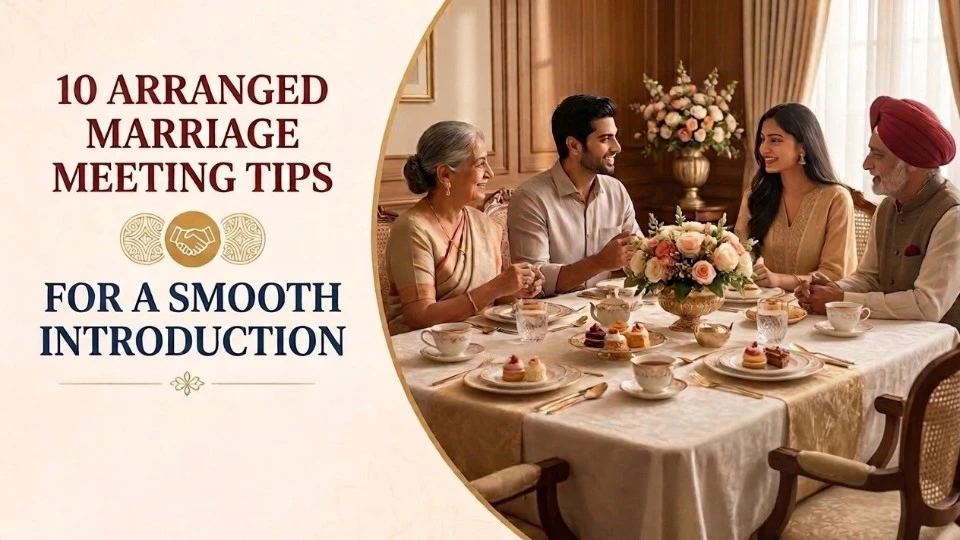
10 Arranged Marriage Meeting Tips for a Smooth Introduction

The first meeting is one of the most nerve-wracking parts of an arranged matchmaking process – and one of the most important. Whether it’s a formal introduction over tea, a home visit with both families present, or a more casual coffee arranged by your advisor, this conversation sets the tone for everything that follows. The good news: a little preparation goes a long way. Here are 10 practical tips to help you walk into that first meeting feeling grounded, honest, and ready to actually get to know the other person – not just perform for them. 1. Prepare Your Story Before the meeting, take a few minutes to think through how you’d describe yourself, your family, and your life so far – not a rehearsed speech, just clarity. What do you want them to understand about your background, your upbringing, your work, and what matters to you? Being able to share this openly and naturally, without fumbling, helps the conversation flow and signals that you’re taking the process seriously. The same goes for your family’s story if parents are involved. A little alignment beforehand on what you’ll each share avoids mixed messages in the room. 2. Get Clear on Your Own Expectations First You can’t have an honest conversation about compatibility if you haven’t thought through what actually matters to you. Before the meeting, get clear on your own priorities – education, career, values, lifestyle, family involvement, location, and long-term goals. Our advisors encourage families to discuss lifestyle and priorities from the start, precisely because vague expectations lead to vague conversations. Walking in with clarity doesn’t mean walking in with a checklist to interrogate someone with – it means you’ll recognize genuine compatibility when you hear it. 3. Discuss Expectations Openly, Not Just Politely It’s tempting to keep a first meeting light and pleasant, avoiding anything that feels too direct. But some topics are worth raising early: career plans, where you see yourself living, views on family involvement, and general life priorities. You don’t need to cover everything in one sitting, but avoiding the substantial questions entirely just delays a conversation you’ll need to have eventually – often after more emotional investment has built up. 4. Stay Respectful – Even If You Sense It’s Not a Fit Not every first meeting leads to a second one, and that’s normal. If partway through the conversation you sense this isn’t the right match, stay respectful and let the meeting run its natural course. There’s no need to be cold or visibly disengaged. A gracious first meeting – even one that doesn’t lead anywhere – reflects well on you and keeps the process comfortable for everyone involved, including your advisor. 5. Honesty Matters More Than Impressing Them It’s natural to want to make a good impression, but presenting an idealized version of yourself tends to backfire once the relationship progresses. Be honest about your background, your circumstances, and what you’re genuinely looking for. A connection built on accurate information has a real foundation; one built on impression management usually unravels later. 6. Mind the Small Etiquette Details Etiquette isn’t about formality for its own sake – it’s a sign of respect for the process and the people involved. A few basics: Be on time, or communicate promptly if you’re delayed Dress in a way that feels authentic to you and appropriate for the setting Put your phone away for the duration of the conversation Greet both the other person and any family members present with warmth None of this needs to feel stiff. It simply removes small distractions so the actual conversation can take center stage. 7. Involve Parents Thoughtfully, Not Overwhelmingly Family involvement is often a meaningful part of the process – but there’s a balance to strike. Parents being present can add comfort and context, especially in the early stages. At the same time, it helps to build in some one-on-one time for the two of you to talk directly, without the whole conversation being mediated by others. If you’re unsure how much family involvement is typical or appropriate for your situation, your advisor can walk you through it – many of our FAQ pages address exactly this, including how parents can speak directly with advisors throughout the process. 8. Ask Questions That Actually Tell You Something Generic questions (“What do you do?” “Do you like traveling?”) rarely reveal much. Instead, try questions that invite a real answer: What does a typical week look like for you? What’s something important to you that people don’t always ask about? How do you see family fitting into your day-to-day life? These kinds of questions turn a polite exchange into an actual conversation. 9. Listen As Much As You Speak It’s easy to focus so much on how you’re coming across that you forget to genuinely listen to the other person. Pay attention not just to what they say, but how they say it – their tone, what they choose to emphasize, what they seem uncertain about. A first meeting is as much about observing as it is about presenting yourself. 10. Manage Your Nerves – and Trust the Process Some nervousness is completely normal, and it doesn’t need to be hidden or apologized for. Take a breath before the meeting, remind yourself that this is one conversation and not a final decision, and trust that your advisor has already done the work of finding genuine alignment before bringing you together. That groundwork is exactly what personalized matchmaking is meant to provide – you’re not walking in blind. If you want a sense of how these first meetings can unfold, our Success Stories page shares real journeys from introduction to marriage, including how those early conversations went. A Final Word A first meeting rarely determines everything, but it does set the tone for what comes next. Preparation, honesty, and a willingness to actually listen will take you further than any rehearsed impression ever could. If you have questions about how meetings are typically

personalized-matchmaking-vs-online-matrimony
Blog

Personalized Matchmaking vs Online Matrimony: Pros & Con

Finding a life partner has never come with more options – or more noise. Matrimonial websites promise millions of profiles at your fingertips. Dating apps reduce the search to a swipe. And somewhere in between, personalized matchmaking has carved out a different path: one built on curated introductions, human judgment, and real conversations instead of endless scrolling. If you’ve typed “matchmaking service vs. dating app” into a search bar recently, you’re not alone. The two models solve the same problem in almost opposite ways, and the right choice depends less on which one is “better” and more on what kind of search you actually want to go through. This guide breaks down how personalized matchmaking differs from online matrimony, the real pros and cons of each, and how to figure out which approach fits your life right now. The Rise of Online Matrimony and Dating Apps Over the last two decades, online matrimonial sites and dating apps have become most people’s default starting point. They’re free or low-cost, available 24/7, and give you access to a huge volume of profiles in minutes. For many, that scale feels like an advantage – more profiles should mean more chances. In practice, though, scale creates its own problem: volume without context. You’re left to sift through hundreds of profiles, guess at compatibility from a few photos and a bio, and manage your own screening, scheduling, and follow-up. The platform connects you to people; it doesn’t help you evaluate them. That gap is exactly what personalized matchmaking is designed to close. What Is Personalized Matchmaking? Personalized matchmaking is an advisor-led approach to finding a partner. Instead of browsing an open database, you work with a matchmaker or advisor who gets to know your background, values, lifestyle, and what you’re actually looking for – then introduces you to a small number of people who are genuinely aligned, rather than everyone who technically fits a filter. As we like to put it at Vats: “We do not overwhelm you with thousands of profiles. We curate considered introductions…” That’s the core difference. A matchmaking service benefits you by doing the filtering work upfront – verifying backgrounds, understanding intent, and using human judgment to assess compatibility in ways an algorithm can’t. You’re not managing a pipeline of strangers; you’re having a small number of meaningful conversations with people who’ve already been vetted for fit. Neither model is universally “right” – they’re built for different priorities. Pros and Cons of Online Matrimonial Platforms Pros: Large pool of profiles to browse at your own pace Low cost of entry, often free to start Full control over who you message and when Familiar, app-based experience Cons: You do all the screening, scheduling, and vetting yourself Profile accuracy and intent can be hard to verify Can be time-consuming and emotionally draining at scale Your profile is visible to a broad, often public audience No one is invested in your specific outcome Pros and Cons of Personalized Matchmaking Pros: Curated introductions based on real compatibility, not just filters An advisor to guide you through the process and give honest feedback Greater privacy – no public-facing profile Less time wasted on mismatched conversations Support with the harder parts: feedback after a match, navigating family involvement, managing expectations Cons: Typically involves a fee for a consultative service Fewer total introductions, since each one is curated rather than open-ended Requires some trust in your advisor’s judgment Less “self-directed” than browsing on your own How to Decide Which Model Is Right for You A few honest questions can point you toward the right approach: How much time do you actually have? If you’re busy with work, family, or other commitments, browsing hundreds of profiles and managing your own outreach can feel like a second job. Personalized matchmaking shifts that workload to someone else. Do you want guidance, or do you want control? Some people want to make every decision themselves, start to finish. Others want a second, experienced opinion – someone who can say “this seems like a good fit, here’s why” or gently flag a red flag you might miss on your own. If you’d value that kind of handholding, matchmaking tends to be the better fit. How specific are your preferences? If you’re looking for a partner who shares a particular community, cultural background, or family expectations – for example, NRI singles balancing life abroad with family ties at home – a general platform’s filters often aren’t precise enough. An advisor who understands that context can identify fit in ways a keyword search can’t. How much do you value privacy? On open platforms, your profile is visible to anyone who searches. Personalized matchmaking keeps your search discreet – no public listing, no unwanted messages, no awkward run-ins with acquaintances scrolling the same site. Why People Choose Vats At Vats, personalized matchmaking means more than an introduction – it means an advisor who stays involved throughout your search. We verify profiles, take time to understand what actually matters to you, and introduce you only to people we believe are worth your time. No public profile, no inbox full of unfiltered messages – just trusted introductions and honest support along the way. Curious how the process actually works? Take a look at How We Work for a step-by-step breakdown, or read more About Us to understand the values – trust, privacy, and genuine care – behind every match we make. Frequently Asked Questions